The Monmouth County Clerk of Courts manages filings and court records for civil, criminal, and family cases. This office ensures all legal documents are properly recorded and organized. It schedules hearings and supports judges, attorneys, and the public. Residents can access certified copies of documents and essential clerk services. The office plays a vital role in the county’s judicial system.
By maintaining accurate records, the Monmouth County Court Clerk supports smooth court administration. The office handles property filings, marriage licenses, and other official documentation. It provides guidance on procedural questions and legal filings. Reliable recordkeeping keeps the court system transparent and efficient. The clerk’s work is central to public trust and legal processes.
What Is the Monmouth County Clerk of Courts?
The Monmouth County Clerk of Courts is a public office responsible for managing court records, filings, and administrative services for the county’s judicial system. It ensures that court processes run smoothly and that official records are accurately maintained and accessible to the public and legal professionals.
The Monmouth County Clerk of Courts plays a vital role in the county’s judicial administration. This office handles case filings, civil and criminal records, and court-related documents. It also manages the scheduling of hearings and provides certified copies of official court documents. The clerk serves as the primary point of contact for attorneys, parties involved in cases, and the general public seeking court information.
Current Clerk of Courts
As of 2025, the public official most closely associated with the Clerk functions in Monmouth County is Christine Giordano Hanlon, Esq., who serves as the Monmouth County Clerk. Christine Giordano Hanlon was first elected to the position in 2015 and has since been reelected to serve additional five‑year terms, most recently winning re‑election in November 2025. While the Clerk of Courts title specifically refers to judicial court administration, in Monmouth County, the County Clerk’s Office manages many of the record‑keeping and court‑related administrative duties, including maintenance of court records, public access to filings, and the Open Public Records Search System (OPRS).
Difference Between Clerk of Courts and County Clerk
While the titles may sound similar, the Clerk of Courts and County Clerk have distinct responsibilities. The Clerk of Courts focuses specifically on the judicial system, handling court administration, case management, and legal filings. In contrast, the County Clerk oversees broader county records, including property deeds, marriage licenses, and voter registrations. In Monmouth County, this distinction ensures that judicial and administrative functions operate efficiently without overlap.
Jurisdiction and Legal Basis
The Monmouth County Clerk of Courts operates under New Jersey state law, providing services for all levels of county courts, including the Superior Court and Family Court. Its jurisdiction covers civil, criminal, and probate matters within the county boundaries. The office is legally empowered to maintain accurate records, issue certifications, and facilitate public access to filings in accordance with state statutes.
Key Responsibilities Include:
- Maintaining and organizing civil, criminal, and family court case records
- Filing and processing legal documents submitted to the court
- Scheduling hearings and managing court calendars
- Issuing certified copies of judgments, orders, and other court records
- Supporting attorneys and public users with information about court procedures
The Clerk’s Office of Monmouth County is essential for ensuring transparency and efficiency in the judicial system. Handling administrative duties, it allows judges, attorneys, and court staff to focus on legal proceedings while keeping the public informed about case activity.
How to Request Court Records or File Documents
Requesting court records or submitting filings in Monmouth County is straightforward. The Clerk of Courts provides both online and in-person options, making document requests and legal filings accessible to residents and legal professionals alike.
Proper procedures ensure requests are processed efficiently and filings meet court standards. Understanding the available methods, required forms, and online tools helps users complete tasks quickly and accurately.
Request Records from Steps
Monmouth County allows requests for court records either online or in person. Online requests are convenient for quick searches and obtaining basic documents. In-person visits offer full access to case files, including older or more detailed records that may not be available digitally.
Online Requests:
- Visit the Open Public Records Search System (OPRS) at oprs.co.monmouth.nj.us
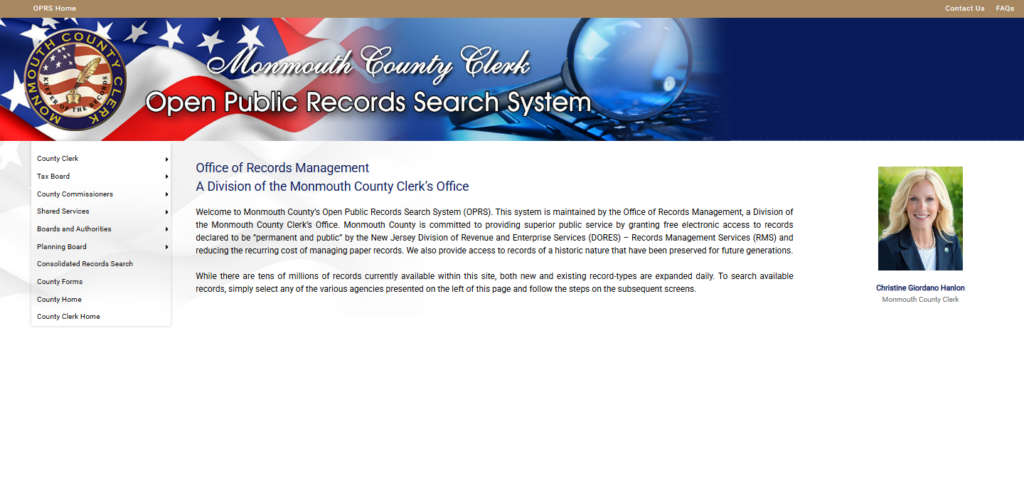
- Create an account or use guest access for basic searches
- Search by case number, party name, or filing date
- Select the desired documents and submit payment for copies
In-Person Requests:
- Go to the Clerk’s Records Department at the courthouse
- Complete a Request Form specifying the case or record type
- Present valid identification and pay applicable fees
- Staff will retrieve records for review or certified copies
Required Forms:
- Case Information Request Form – used for general records
- Certified Copy Request Form – for official documents required for legal purposes
- Payment may be accepted via cash, check, or credit card, depending on the method
Records management procedures ensure documents are indexed and stored securely. Staff can assist with locating files and explaining fees, making the process efficient for first-time or experienced users.
Filing Court Documents
Submitting court filings correctly is critical for timely case processing. The Monmouth County Clerk of Courts accepts filings for civil, criminal, family, and probate matters, following specific rules for format and submission.
Submission Methods:
- In-Person Filing:
- Bring completed documents to the Clerk’s filing office
- Use designated counters for civil, criminal, or family court filings
- Pay filing fees at the time of submission
- Mail-In Filing:
- Include all completed forms with a check or money order for fees
- Use a clear cover letter indicating case type and party names
- Mail to the address of the relevant Clerk’s office
Fees and Formats:
- Fees vary by case type and document type; for example, civil complaints and motions carry specific charges
- Most filings must be typed, signed, and include necessary attachments
- Certified or notarized copies may be required for certain legal matters
Following proper submission guidelines helps prevent delays or rejections. The Clerk’s office provides instructions and reference materials for common filing types.
Tools & Online Portals
The Open Public Records Search System (OPRS) is the primary online portal for Monmouth County court records. It allows users to search and request documents without visiting the courthouse.
Using OPRS:
- Navigate to the search page at oprs.co.monmouth.nj.us
- Enter search criteria such as case number, party name, or filing date
- Filter results by court type (civil, family, criminal, probate)
- Select and submit requests for printable or certified copies
- Pay applicable fees online
The portal supports a clear view of case history, filing status, and document types. Using OPRS reduces wait times and allows users to plan visits or obtain documents remotely.
Key Responsibilities & Clerk Services
The Monmouth County Clerk of Courts manages court filings, maintains public records, and provides a variety of clerk services to support the community. This office ensures that court and public records are accurate, secure, and accessible according to county regulations.
Court Filings & Case Records
The clerk’s office handles a wide range of court filings for civil, criminal, and family court cases. Residents and legal professionals can submit complaints, motions, judgments, and other legal documents at the filing office. Each submission is carefully recorded and stored in the county’s records management system, which allows for organized retrieval and tracking. Through the Case Search feature, individuals can efficiently locate specific cases, check filing statuses, and review relevant court information without needing to visit the office in person. This functionality enhances transparency and simplifies access to essential legal records.
Court records are maintained in both physical and electronic formats. Physical files are stored in secure filing rooms, while digital records are accessible through county systems that track filing history and case progress. This dual approach ensures that legal documents remain safe, accurate, and easy to reference for court staff and authorized parties. Filing fees vary based on the document type. Certified copies of court records are available for those who need official documentation.
Typical costs include:
| Service | Fee (approx.) | Notes |
|---|---|---|
| Civil case filing | $100 | Varies by case type |
| Criminal case filing | $75 | Includes docketing fee |
| Certified copy | $5–$10 per page | Can be requested in-person or by mail |
These records play a critical role in court procedures, legal research, and public transparency.
Public Records & Records Management
The clerk’s office manages a wide array of public records, including property deeds, mortgages, liens, and court documents. The office follows strict policies for record handling and disclosure, protecting sensitive information while providing public access where allowed.
Residents can use the Monmouth County Public Records Search through the online portal at oprs.co.monmouth.nj.us. This tool allows users to search for case information, view filings, and request copies. Public records available online include:
- Civil and criminal court case summaries
- Property deeds and land records
- Marriage and divorce filings
- Judgment and lien information
Requests for redacted documents follow a standard procedure. Individuals can submit forms to limit the disclosure of sensitive data, ensuring compliance with state privacy regulations. This careful approach balances transparency with privacy.
Additional Services
Beyond court filings and records management, the Monmouth County Clerk offers several additional services to the public:
- Passport Processing: The office accepts passport applications, provides guidance on required documentation, and facilitates application submission to the U.S. Department of State.
- Notary Services: Residents can have documents notarized at the clerk’s office, which ensures legal recognition of signatures.
- Election Records: Voter registration data, election results, and candidate filings are managed and maintained for public reference.
- Document Recording: The office records deeds, mortgages, and other property-related documents to establish legal proof of ownership and maintain accurate land records.
These services support legal, civic, and personal needs in Monmouth County, making the clerk’s office a central hub for both court-related and administrative functions. By maintaining reliable records management and offering essential public services, the office ensures that community members and legal professionals have the resources they need efficiently and professionally.
Contact Information & Office Details
The Monmouth County clerk’s office in New Jersey is located in Freehold and serves residents with public records, elections, passports, and other official services. For contact information and office hours, the main lines and email are publicly available so visitors can plan their visits or calls.
Main Office & Branch Locations
Main Office – Freehold (Clerk of Courts & Clerk Services)
- Address: 33 Mechanic Street, Market Yard, Freehold, NJ 07728
- Phone: (732) 431‑7324
- Fax: (732) 761‑9371
- Email: CountyClerk@co.monmouth.nj.us
- Website: monmouthcountyclerk.gov
Branch Office – County Connection
- Address: 3544 State Highway 66, Neptune, NJ 07753
- Phone: (732) 303‑2828
- Email: Passports.Neptune@co.monmouth.nj.us
These locations connect Monmouth County residents with services such as public record access, passport processing, election services, and more. Local contact points help users with appointment scheduling and specific inquiries.
Office Hours & Holiday Closures
Most public services at the clerk’s office in Monmouth County run during standard business hours:
- Monday – Friday: 8:30 a.m. – 4:00 p.m. or 4:30 p.m., depending on specific division schedules
- Closed weekends and all major public holidays recognized by Monmouth County
Passport offices at both Freehold and Neptune follow similar hours but may require appointments, especially around peak travel periods. Calling ahead is recommended to confirm hours before planning a visit.
Phone Numbers & Emails by Service
| Service Area | Contact | Notes |
|---|---|---|
| General Clerk Services | (732) 431‑7324 | Main line for records, filings, certifications |
| Fax (Freehold) | (732) 761‑9371 | Document submissions |
| Passport – Neptune | (732) 303‑2828 | Branch passport office |
| Passport – Freehold | via main number | Appointment hours differ |
FAQs – About Clerk of Courts
The Monmouth County Clerk of Courts manages court records, filings, and administrative support for the county’s legal system. Residents can request certified copies of documents, check case statuses, and complete procedural requirements directly through the office.
What does the Clerk of Courts do?
The Clerk of Courts serves as the official custodian of all court records in Monmouth County, including civil, criminal, family, and probate cases. The office handles legal filings, maintains court schedules, and ensures records are accurate and accessible to the public and legal professionals. Residents can request copies of court documents, verify case information, and submit required forms through the office, making it an essential resource for maintaining legal and public records in the county.
How do I get certified copies of court records?
Certified copies of court records are official documents verified by the Clerk of Courts, and they can be requested for legal, personal, or professional purposes. Requests can usually be submitted in person, by mail, or online, depending on the type of record, and fees are required for processing. Some documents may also require proof of identity or a demonstrated legal interest. Once the request is processed, the certified copy is issued either in person or via mail, allowing residents to use it for legal transactions, court proceedings, or official documentation.
Where is the Clerk of Courts’ office located?
The main office of the Monmouth County Clerk of Courts is located in Freehold, NJ, serving as the central hub for filings, public records, and administrative services. The office address is 1 East Main Street, Freehold, NJ 07728, and the official website monmouthcountyclerk.gov provides additional details on services, branch locations, and online resources. Visitors can access records, submit forms, or make inquiries at this location during regular business hours, and the website offers guidance for services available remotely or at other facilities.
What are office hours?
The Clerk of Courts’ office operates Monday through Friday, from 8:30 AM to 4:30 PM, and remains closed on state and federal holidays. Phone and email support are available during these hours for questions about filings, records requests, or procedural matters. Planning visits early in the day is recommended to avoid longer wait times, and the office staff can provide information on service availability, required documentation, and current procedures for handling court records efficiently.
Is legal advice provided at the Clerk’s office?
The staff at the Clerk of Courts office cannot provide legal advice, as their role is strictly administrative, focusing on record-keeping, filings, and general procedural guidance. Residents seeking legal interpretation or counsel should consult a licensed attorney or legal aid organization. However, the office can explain filing requirements, deadlines, forms, and fee structures, helping individuals ensure their paperwork is correct and complete before submission, which supports smoother processing of court matters.